
Borrowing the Balance Sheet
A Strategic Note for Oil & Gas Service Providers
Around two-thirds of strategic alliances fail — a number stubbornly stable for thirty years. And yet partnerships are increasingly one of the most powerful strategic moves a company can make. This note is about why they matter, why so many fail, and how to build yours to land on the right side of those statistics.
Various studies by firms including McKinsey, Bain, and PwC have estimated that half to two-thirds of strategic alliances fail to meet their intended objectives. Energy and industrial sectors do not do better. And yet the firms that need partnerships most are part of those statistics.
Why partnerships matter — alongside build and acquire
Companies have three options when they need new capability: build, buy, or partner. Each has its place — but increasingly, in oil & gas services, partnership is the option that compounds best for a growing class of decisions.
Capital tied up in owned assets is capital you can’t redeploy when the market shifts — and in this industry, strategic priorities can shift rapidly across technology, regulation, and commodity cycles. The firm whose strategy is to maximize the current asset base is slow by design. It spends its time defending what it owns instead of chasing what’s next. The firm that borrows capability keeps the option to pursue CCS this year, hydrogen next year, nuclear power the year after — without having to sell anything to get there. Asset-light is agility-rich.
And the benefits compound. A solid partner brings more than the contract scope. They bring adjacent expertise, networks of suppliers and operators you couldn’t otherwise reach, and credibility with customers who already trust them. The practical wins follow: cost down, lead times compressed, decarbonization targets delivered.
So why do most partnerships still fail?
Three main causes:
Most “partnerships” are acquisitions in disguise. Deals branded “JV” that require a big equity cheque or asset transfer aren’t partnerships — they’re acquisitions with a different name on the door. And once equity is on the table, the value tends to walk: the people who built the technology, the market access, and the customer relationships leave after closing. They didn’t sign up to work for the acquirer. In many cases, the asset that mattered most was the people.
Most failures originate in formation, not execution. Leaders blame delivery — harder technology, shifted markets, the partner’s team. Some is true. Most isn’t. The deal was wrong from the moment it was signed.
Most are negotiated with the wrong people in the room. The BU lead and a contracts lawyer surface the wrong issues. Decision-makers, cultural translators, and SMEs arrive after signing, when fixing costs more.
What a real partnership looks like
Four structures that can reduce the need for balance-sheet expansion:
Joint Development Agreement. Two technologies contributing to one product. Aker Solutions–Rolls-Royce SMR partnered for small modular reactor development. Baker Hughes–Hanwha for ammonia turbines. MODEC–Carbon Clean for offshore carbon capture. JGC–Asahi Kasei for green ammonia at Namie.
Build-Own-Operate contract. Partner owns the asset; customer signs the long-tenor offtake. L&T Energy GreenTech is building one of India’s largest green hydrogen plant for Indian Oil at Panipat — 25 years, 10,000 tonnes a year, no asset on Indian Oil’s balance sheet.
Alliance contract. Risk and reward shared on a single project, no shares change hands. PETRONAS Carigali’s EPCIC alliance with MMHE on Kasawari — one of the world’s largest CCS facility — gave MMHE a credential that opens Phase 2 and 3.
Framework agreement. The simplest, most underrated structure. Agree on direction, build trust, commit no capital. Used right, it’s the first rung of a ladder you climb until you’re ready for something binding.
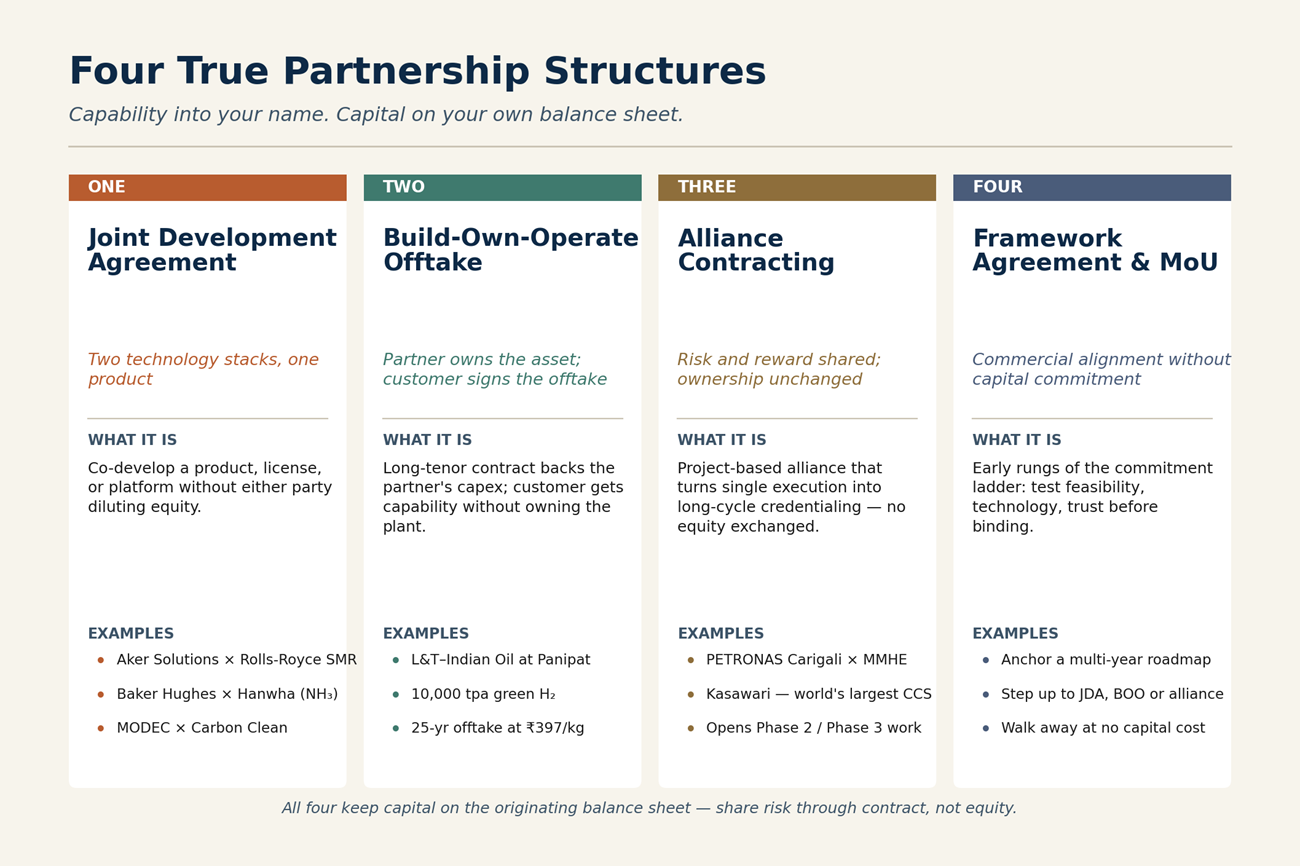
Figure 1. The four asset-light shapes — capability into your name, capital on your own balance sheet.
How to pick a partner — the four dimensions
Pick the wrong structure and you can recover. Pick the wrong partner and you won’t.
Before partner-shopping, run one test on the deal itself: it should help you do at least one of four things.
1. Increase WTP / WTU — Customer willingness to pay — or willingness to award you broader scopes of work.
2. Lower your cost — through scale, shared infrastructure, or borrowed capability.
3. Gain VRIO resources — Valuable, Rare, Inimitable, Organisationally embedded.
4. Create new markets or new customers — open a segment or geography you couldn’t enter alone.
Score on two or more, and the partnership is worth the work.
The four dimensions need a clear answer:
Strategy. Are our long-term goals compatible? Will you still want the same things in 5 years?
Resource. Does each side bring something the other can’t easily get on the open market? When one side brings only money while the other brings technology and know-how, the asymmetry compounds.
Organisation. Do your structures and decision speeds match? A partner that takes six weeks to approve a change is incompatible with one that decides in days.
Culture. Do you share enough values to handle what you can’t predict? Korean shipbuilders, Norwegian engineers, Malaysian fabricators, and Indian operators don’t handle escalation the same way. Compatibility doesn’t have to be sameness — but it does have to be conscious.
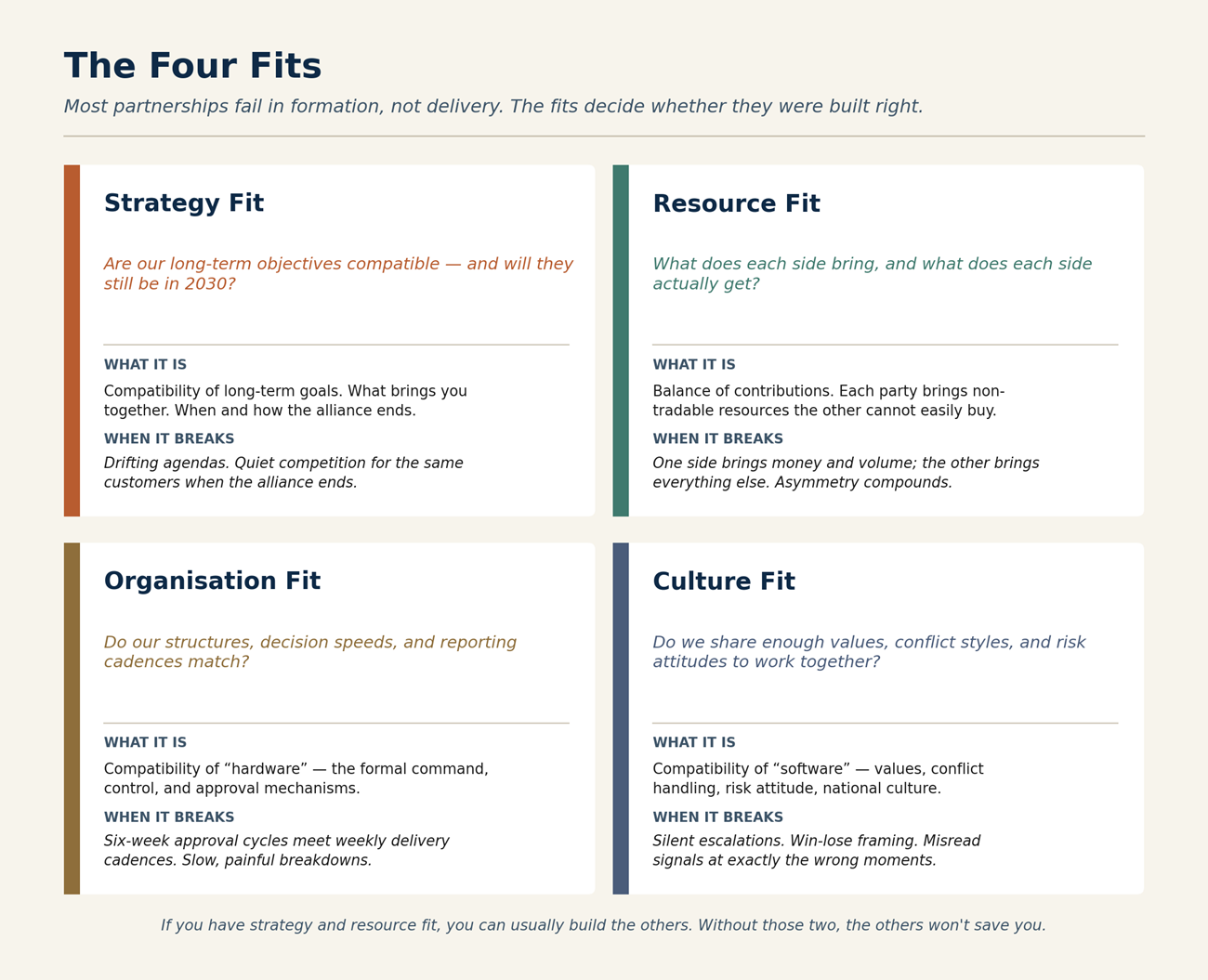
Figure 2. The four dimensions — every one needs a clear answer before signing.
How to make it work — governance
Partnership management is three jobs, not one. Forming is where most failures originate. Designing is next: governance, escalation paths, relationship owners on each side. Running is day-to-day management, conflict handling, and learning across the portfolio.
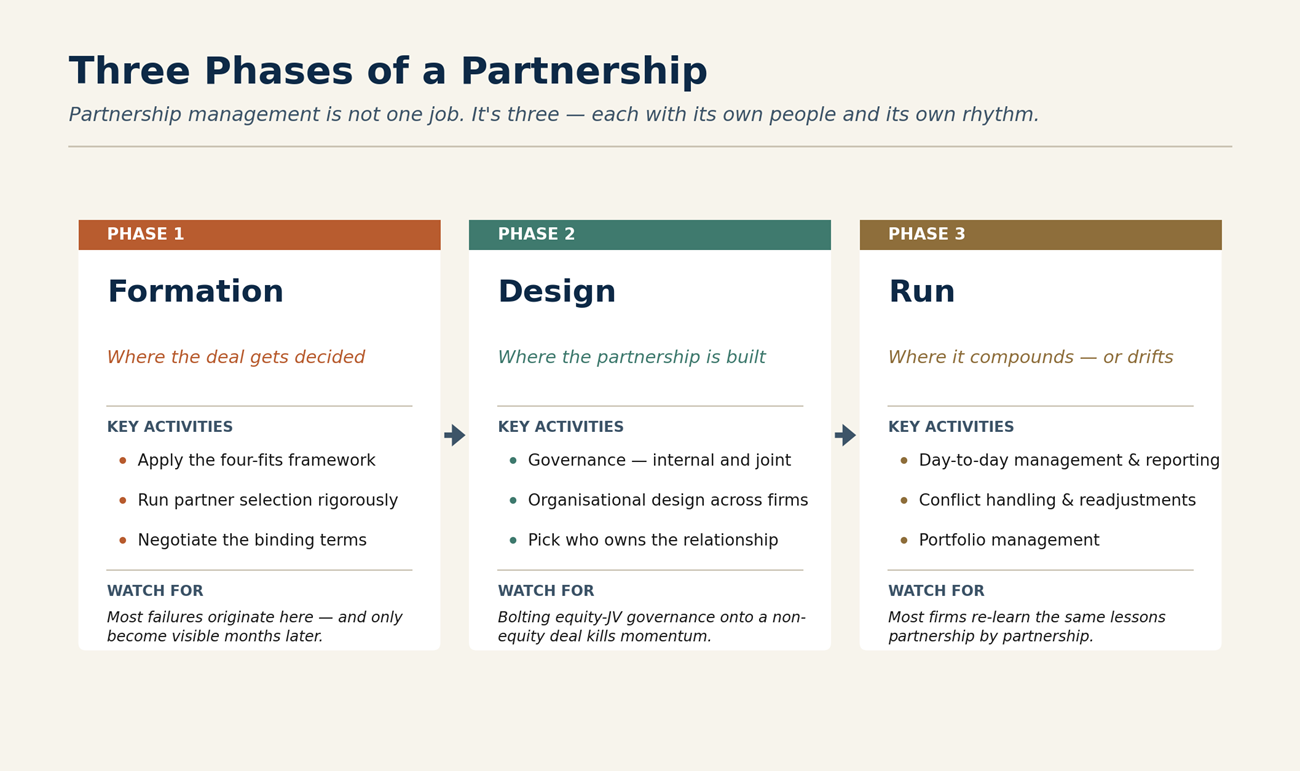
Figure 3. Three jobs after signing — forming, designing, running.
Ensuring the right people are at the table from both sides of the partnership is key to success.
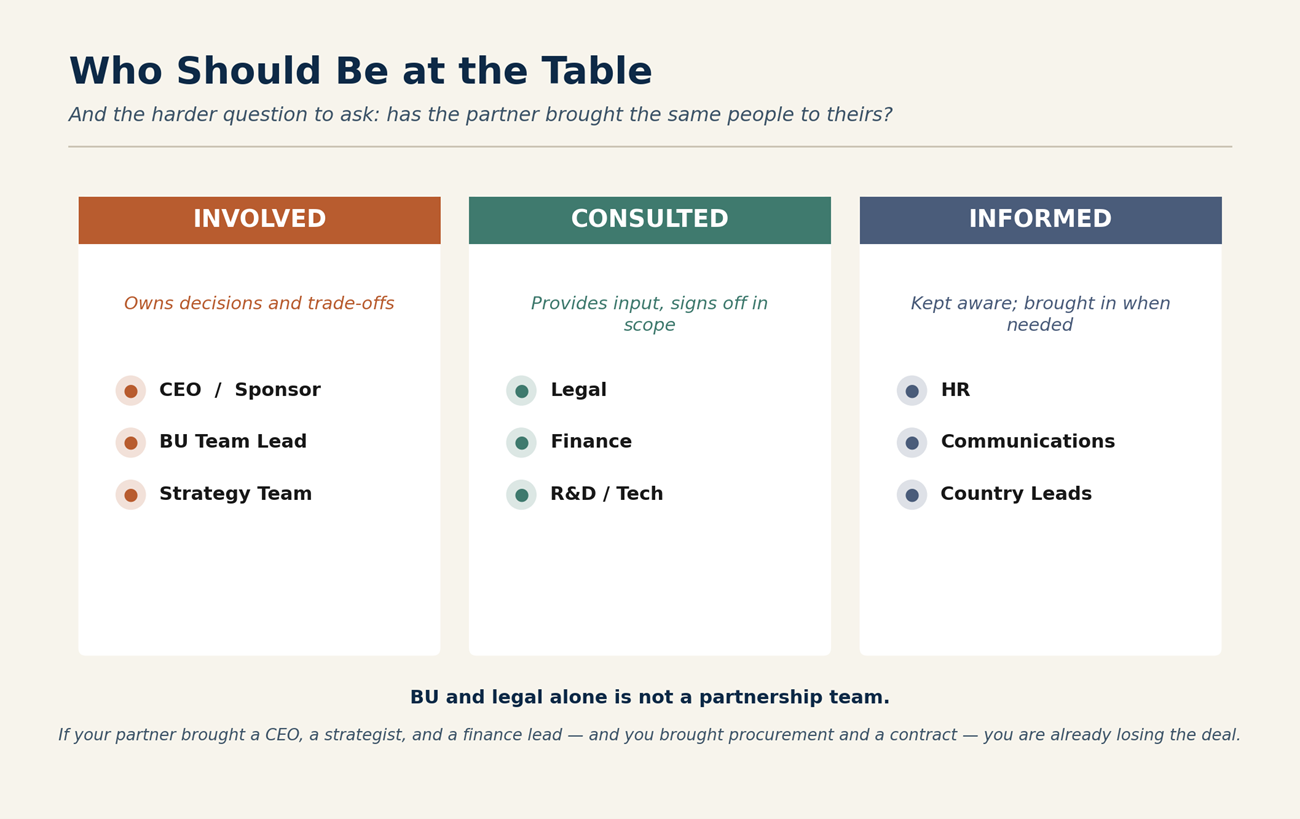
Figure 4. The right room — the right people, in the right role, on both sides.
One last point: Some alliances fail because they have simply outlived their strategic utility, not because of poor management. Understanding when and how to dissolve the partnership with clear parameters agreed at the start will help avoid this problem.
Manage partnerships as a portfolio
A single partnership isn’t a strategy. A portfolio is. The firms that compound build a partnership plan that maps capability gaps to partners, sequences deals against the strategic horizon, and tracks for cross-leverage. Which gaps remain uncovered? Which two partners could combine for a third deal? Which alliance is past its useful life?
The takeaway
Asset-light structures are not automatically more profitable. They often trade some upside capture for flexibility, lower capital intensity, faster market access, and reduced execution risk. The strategic question is not whether to own less at any cost, but where ownership creates differentiated returns — and where partnerships create superior agility. Borrowed capability must also be managed carefully to avoid replacing asset rigidity with partner dependency.
The winners in 2030 will pick the right tool for each capability gap — build what they should own, acquire what they should absorb, partner for everything in between.
That’s the harder discipline. Done well, it can also be the cheaper one.
Helios Energy Advisory works with global and Asia-headquartered oil & gas service providers on partnership strategy, deal structuring, and capability allocation. For a conversation about how these dynamics apply to your portfolio, visit www.heliosenergyadvisory.com or contact info@heliosenergyadvisory.com.
